My Year in Books 2014

The following is a list of the books I have read this year. You can see what I thought in more detail on my Goodreads page, or feel free to ask me. Each is a clickable link to where you can buy the book (if available). Each year I challenge myself to read a certain number of books. This year it was forty-five.

2014

The Best of Hammer & Bolter: Volume 1 – Edited by Christian Dunn

The Iron Man – by Ted Hughes

A Study in Scarlet – by Arthur Conan Doyle

The Black Library Anthology 2013/14 – by Graham McNeill et al.

Flowers for Algernon – by Daniel Keyes

Zen in the Art of Writing – by Ray Bradbury

Gone Girl – by Gillian Flynn

Scars – by Chris Wraight

Countdown – by Robert Orci

Guardians of the Galaxy, Volume 1: Legacy – by Dan Abnett

A Storm of Swords: Blood and Gold – by George R.R. Martin

Knights of the Imperium – by Graham McNeil

War Horse – by Michael Morpurgo

Vengeful Spirit – by Graham McNeil

Secret Invasion: The Infiltration – by Brian Michael Bendis

Slaughterhouse Five – by Kurt Vonnegut

The Last Fighting Tommy – by Richard Van Emden

A Feast for Crows – by George R.R. Martin

Ravenlord – by Gav Thorpe

Sedition’s Gate – by Nick Kyme et al.

Before they are Hanged – by Joe Abercrombie

Last Argument of Kings – by Joe Abercrombie

Secret Invasion – by Brian Michael Bendis

War of Kings: Road to the War of Kings – by Dan Abnett

Elantris – by Brandon Sanderson

The Damnation of Pythos – by David Annandale

Save the Cat! – by Blake Synder

The Purge – Anthony Reynolds

Half a King – by Joe Abercrombie

Guardians of the Galaxy, Volume 2: War of Kings Book 1 – by Dan Abnett

Deathwatch: Xenos Hunters – Edited by Christian Dunn

Mockingjay – by Suzanne Collins

Writing for Comics and Graphic Novels – by Peter David

Ecko Rising – by Danie Ware

Traitor’s Gorge – by Mike Lee

The Best of Hammer & Bolter: Volume 2 – Edited by Christian Dunn

Death of Integrity – by Guy Haley

Space Marines: Angels of Death – Edited by Graeme Lyon

Death and Defiance – by Nick Kyme et al.

All Quiet of the Western Front – by Erich Maria Remarque

Renegades of the Dark Millennium – by Aaron Dembski-Bowden et al.

The Shadow of War – by Stewart Binns

Legacies of Betrayal – Edited by Laurie Goulding

1914: Poetry Remembers – Edited by Carol Ann Duffy

Homecoming – by Christie Golden

Birdsong – by Sebastian Faulks

The Seventh Serpent – by Graham McNeill

The Handmaid’s Tale – by Margaret Atwood


I’m also currently reading Lord of Chaos by Robert Jordan. It’s an epic book and I won’t manage to finish it this year, especially if the previous five in the series are anything to go by. I’m reading it because I’m more curious how the story ends than anything else. A classic example of a better world-builder/story writer than engaging writer, but I hear he gets better…the Brandon Sanderson took over.

Thanks for reading.

Fear of Failure

Fear is one of the biggest obstacles to overcome when you want to do something. You may disagree, but it’s true, whether it’s conscious or subconscious. (It took me a few minutes to come up with that opening line for fear or getting it wrong).

As I sat here this morning, wanting to write and finding myself constantly distracted I came back to this idea. Every time we try to do something hard, or challenging, we as humans often try and find something else to do in its stead. Take for example, this very blog post. I really should be writing my novel, but instead I thought I would share my infinite wisdom with you, whether you like it or not.

We often don’t attempt things because we are scared of failing at them. Throughout our education, we’re warned off by failure, rather than encouraged by success. As such, there seems to be a general consensus that “If you don’t try, you can’t fail.” Which does seem somewhat backward, but it’s definitely out there. I often don’t blog because I’m scared that people might disagree with what I have to say, or probably more accurately, that no one will read it. Low blog stats or the most depressing thing for a writer. (Okay, maybe not the most depressing! But it still sucks.)

I don’t suffer from writer’s block, I suffer from fear. When I sit down to write, what stops me isn’t not knowing what to write (though my brain often tries to convince me that’s true.) I always outline my stories and know where they are going. It’s to do with the fact that I’m worried that it will be crap.

This all reminds me of a panel I went to at a convention, entitled “Fear and Writing” (Or something along those lines). It was hosted by Emma Newman (@emapocalyptic), who I believe was a teacher. One sentence she said then has stuck with me ever since: “Give yourself permission to write shit.” Which is probably one of the most important pieces of advice a writer can receive.

It’s okay to write crap, you can improve it. You can’t improve what isn’t there, no matter how awesome it might be in your head.

There are two types of writers “pantsers” (see: flying by the seat of your pants) or outliners. Both work fine if you can convince yourself to write and just write, then come back and edit it later, polishing it until it is as good as it deserves to be.

I do know of writers who “close edit” while they write, which is fine. It works for them, and they have learnt how to work that way in what I can only assume is a pretty exhausting and time consuming manner.

However if you find yourself sitting in front of a blank screen, convinced that you don’t know where the story goes. “Give yourself permission to write shit”. I dare say once you’ve got that first draft it will be better than you expected. Besides, you can always get out that red pen and start turning it into the masterpiece you envisaged.

I’ll leave you with an analogy. I always like to use sculpture as a defining point of art: A sculptor can chip away at stone and make a fantastic piece of art, but he can’t sculpt if he doesn’t have any stone.

Now I really should get back to writing that novel, huh?

Thanks for reading!

Re…search…? WW1

Hi guys, as some of you may know I am in the process of planning and writing a WW1 novel.

I also have to pitch it to agents and publishers over the next few weeks as part of my MA class. If last night’s practice was anything to go by it will be okay, but I need more information.

I have an idea for characters and plot, which I’m really excited about, but anything I can do to flesh it out and/or hone it would be incredibly useful.

Due to this year being the centenary of the outbreak of war there has of course been a massive interest in it. There has also been an influx of books and novels on the subject. There are just too many books that have been published since 1918 to physically be able to read them.

So I’m asking for your help, and comments are very much encouraged in this.

I would like to know what WW1 books (preferably novels) you have read and a short comment on the focus of the story (regiment, battle, character, etc.). I’m especially looking to know if there are any novels that cover the King’s Liverpool Regiment or Liverpool Pals Battalion.

Your help will be greatly appreciated, and if it ever gets published I will see if I can include a list of acknowledgements!

Thanks for reading.

Face Lift

No, I’ve not had a face lift; I’ve given my blog a face lift.

As part of this semester on the MA course we have been tasked with working on and increasing our web presence as writers. We can do this by building websites, blogs, and tweeting, etc. In order to not just promote ourselves and our writing, but also to define ourselves as writers.

What kind of writer am I? A terrible one, hahaha…ahhh.

I figured that as I already spent a ridiculous amount of time on the internet that I would give the blog a facelift and try and make it more functional. Lets face it, it looked pretty terrible before.

One part of that was also adding a new blog post, this one. I haven’t blogged since June. Oops!

So what you will start to see, all going to plan, is more blog posts as well as more links, etc. on writing advice, resources and recommended reading.

I’m also busy working on some new stories, but at the moment I cannot tell you anything about them! The voices won’t let me…

Let me know what you think, and if there is anything that can be improved visually on the website. All feedback is welcome.

Thank you!

I’ve been busy, write?

Well, look at that, it’s been ages since I made a blog post. I don’t really have any excuses except for that one that everyone always has ‘I’ve been busy’. Well, I have, but I really should have updated this blog more. I guess another reason that I had no updates is because I had no writing exercises to post from my masters course as the first year has now come to an end.

I spent most of May being very busy, coming towards the end of the first year of the course. As part of Liverpool’s ‘Writing on the Wall’ literary festival, they held a ‘Pulp Idol competition’, and I was encouraged to enter by the Master’s course leader. It was a completely nerve-wracking experience. I may stand up in front of a group and talk on a daily basis, but when it comes to reading out my own work it’s completely different. No matter how much I tried to convince myself I would be okay and it wasn’t too different to lecturing, I still got nervous. In the end I think it went quite well, I got up, read well and, I believe, answered the questions from the panel of judges well, but unfortunately I didn’t make it through. In fact, no one that had entered that heat from my class got through, which is disappointing. I did continue to follow the rest of the competition, going to the next heat and final, and I was pleased when my good friend Rob Knipe came runner up in the competition. Look out for his name as he’s now in contact with some agents and with any luck there will be some well written, hilarious sci fi and fantasy books coming to your shelves soon.

The rest of may I spent frantically trying to get ready for the end of the first year of the course. As per usual we had an assignment due. I used mine as an excuse to get the first part of a novel I am writing about the Great War done. It was a great idea at first, a hugely rich period of time and I definitely feel I have a story to tell (more about that in the future. I don’t want to give too much away now do I?), but I was somewhat naive to the sheer amount of research I would need to do. Of course I was aware of the fact of research and I had already been reading about the subject before I had the idea for the novel, but when I wrote something I had to make sure it was correct. The first scene is also set in Liverpool before the war, so I had to make sure that the feel and surroundings were correct. Everything I read unearthed more questions and more lines of research, and as usual with research it grew larger and larger over time. Thankfully I was able to get a edited draft in, and it’s in a state I’m quite happy with. It’s no means perfect, and there will definitely be some factual errors that till need ironing out, but it’s a start and I feel it’s quite compelling. Hopefully it will see the light of day.

So what else have I been doing that has kept me so busy? Well, amongst all that I was learning to drive. I had taken two tests when I was 18, but the examiners in Eastbourne, where I lived at the time, were the most grumpy people I have ever met (which is saying something for Eastbourne) and I failed them both for silly little reasons. So I gave up until now. I had forgotten how much time it took up, not just physically, but also mentally. Anyone that says it’s just two hours a week is underestimating. I may have had one hour lessons the first time, I can’t exactly remember, but two hours are intense. I had to repass the theory test, so that required preparation and the closer I got to the practical test the more nervous I became, and the less I could concentrate on anything else. Thankfully, on the 5th June I passed and I now sit here with a shiny pink driving licence (now to get a car…). But I have to make a note, I couldn’t have done it without the excellent tuition of Autonomy Driving School. If you’re learning near Liverpool then I thoroughly recommend Jan.

After passing, I then spent the entirety of the week, when not at work, recording guitars for the Lazarus Syndrome album. I’m a bit behind on this as everyone else (bar the vocals) has done their part. But, I’ve been busy, right? We all could do with a few more hours in the day. If you want more info on that check us out on Facebook.

So, that’s what I’ve been up to. I hope to have more updates for you soon. I’m currently waiting on someone to get in touch with me on a very important project, but I can’t really talk about that yet. I’m off to write…

Thanks for reading.

Far Worlds Released!

I meant to blog a few days ago, but I’ve been ill. Oh boy, have I been ill! 4 boxes of man size tissues was not enough to stall this manflu of epic proportions and getting up from the sofa still makes me feel dizzy. On Tuesday I had to drag my sorry arse to the driving theory test centre and spent a horrible 40 minutes curled over the desk. Thankfully I passed. I didn’t fancy having to do that again. (I already passed about ten years ago, but stopped pursuing the practical test after a couple of harsh fails.)

But that’s not the only good thing that happened on Tuesday, no!

Far Worlds was released.

Those of you that have been reading my blog regularly will know of this already, but Far Worlds is a speculative fiction anthology in which I have a story. Its been published by the lovely people of the Bolthole and is currently available on Kindle, here and will be available, I’m told, in paperback next month.

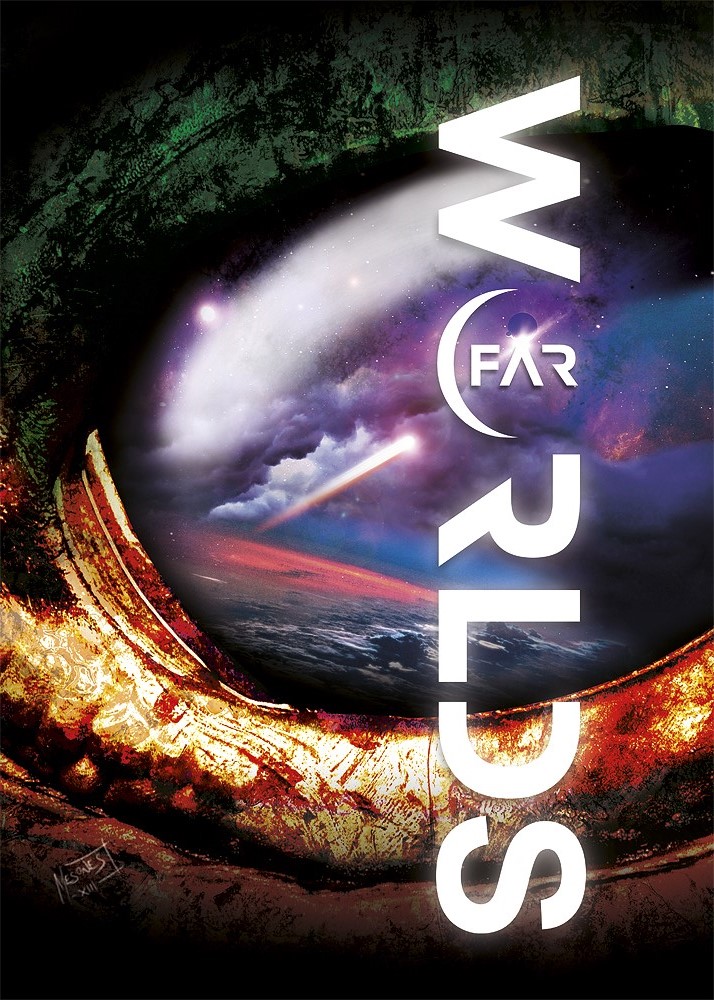
I just love the artwork for this book:

Image

I mean, look at it, how awesome is that? It’s a shame my kindle is black and white. I will be getting a paperback of it!

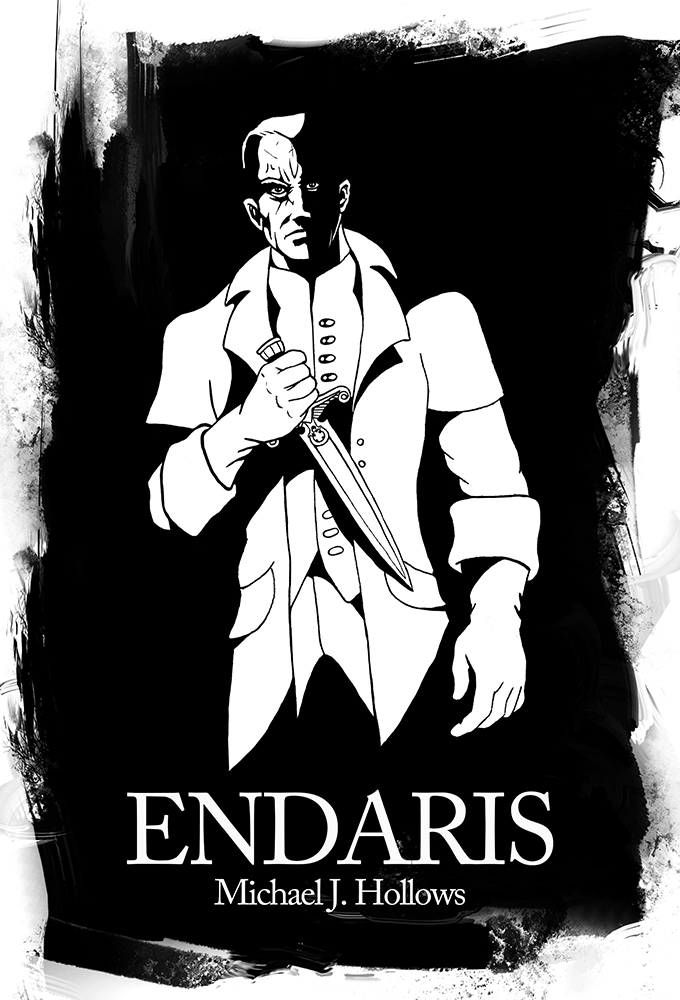
As part of the promotion for the book, the editors posted an excerpt from each story on the books Facebook page. So I might as well share the excerpt from my story again. Also, each story has its own internal illustration. Manuel Mesones (You can find him here) has done a fantastic job with each of these. I won’t tell you which character this is, but you can all guess in the comments.

Image


What he saw astounded him. He had uncovered a metal construction, approximately one metre in length, curved at one end. The most startling thing about the object was that it was fire-blackened from one end running along its surface, removing all detail, scouring it into a smooth plate. He had no idea what it was or where it had come from; he hadn’t seen anything like it before in his career. But whatever it was, he was sure of one thing.


It wasn’t from this world.


I hope that makes you want to go and read the story and please feel free to add your feedback and comments on here, Amazon or on Goodreads.

Once again, thanks for reading and I hope to be back with some more news soon!


Far Worlds

I’ve been sitting on this for a while, not quite believing it was true or trusting my own eyes, but I can now tell you: I have a story coming out!

My story ‘Endaris’ will feature in a science fiction anthology called ‘Far Worlds’ published by the lovely group at the Bolthole. (You can find the Facebook page by clicking here) It’s released on the 25th of March and you’ll find more about that over at the page.

I’m really excited about this, not only because you will all finally be able to read my story, but because of all the other stories that are coming out with it. There are thirteen stories included, not to mention the flash fiction that accompanies them.

The premise was to write a story based far away from Earth (without any link at all actually) and that in itself requires the building and writing of each writer’s own unique culture and characters. I’m looking forward to seeing what my fellow writers have come up with in their rich and fascinating worlds. I don’t want to give too much away about my story (you have to read it!), but I found the premise an interesting challenge. My world touched on new ground for me as a writer, far from the bright and shiny future dystopias I am used to writing. Instead I grounded it in a real world culture. A cookie for the first to get it right! (there may not be any actual cookies). To say anymore would give far too much away. There is also an overruling plot device, but again you’ll have to work that out for yourselves.

The editorial process was fascinating; realising what things other people can see in your story and helping to bring them out. If you were to look at the first draft then at the published piece, I think you would be amazed. It can also be good for the ego, when an editor tells you they love a particular part, but also crushing when something you wanted to show just didn’t come across. But it is always better for the story. You may feel precious about some parts, but that can be detrimental as writing a story is more often than not about how the reader reads your work.

The eagle eyed amongst you may be able to find an extract from Endaris in a previous blog. I’ll leave you to sift through, but I warn you it may be quite different!

That’s all from me for now.

Please go and take a look at the page to keep up to date with the publication and there are also some freebies on there in the shape of artwork and flash fiction stories.

Once again, thanks for reading!

Dickens in Space

I’m ill.

I’m supposed to be editing a second draft of a story due to its deadline being on Saturday, but I can’t concentrate. So, I thought the best writing I could do in this state is to tell you about something I did in class last week. I also just wrote this once and Google Chrome, in its infinite wisdom, decided to quit. So here is attempt number two. Probably quite apt, as I’m sure what I typed before was better.

In class last week we analysed a piece of prose in a group, discussing everything we could think of from sentence structure and rhythm to semantic feel and the metaphors used. At the time we didn’t know who our piece of prose was written by, but after our lecturer suggested we read it out loud, I noted it reminded me of the start of a Dickensian film where there is narration and the camera is zooming into the scene. The piece was actually the beginning of Dombey and Son by – you guessed it! – Charles of the Dickens clan. It raised an interesting point, Dickens actually made more money from reading his work than from writing. So, if you struggle reading his work, try reading it aloud, or try and audio book. It makes an interesting difference, particularly to rhythm and pacing.

As homework from this we were tasked with taking a scene we had written and writing a pastiche. In basic terms, every story has a scene, but stories vary in style, so we had to take a scene and write it in the style of the author we analysed; Charles Dickens. It was one of the hardest things I have had to write so far. Thankfully I have read Dickens (I hadn’t read any of the others the other groups looked at), but I have a very contemporary style, that is influenced heavily by modern science fiction. This led to the title of this blog as myself and the other members of my group (all science fiction and fantasy writers) shared our pieces. I suggested Rob should turn his (excellent) piece into Dickens in Space using his usual hilarious comedy stylings. So keep an eye out for that one!

I don’t feel my piece was as good as the others, but I tried none the less. What follows is a scene written for the story I mentioned earlier, re-written in the style of Charles Dickens. Be prepared to laugh, to cry and the throw your computer out of the window in disgust! Without further ado (What is ado?) I give you Endaris by Michael J. (Dickens)

Endaris in the style of Dickens

Michael J. Hollows

The royal court, home to the godly, powerful, and undying king, sat in the heart of Endaris; where the houses lined the city in rows, short, thin, and narrow, like precessions of match sticks, although the inhabitants seldom matched; great grass courtyards grew in splendid colours, like the grasping tendrils of the forest that lay to the south, but controlled and trimmed, synonymous with the populace of the city. Those in power lived in mansions, around the houses, housing the round. They longed for the decorative comfort of indoors, past shuttered doors, and jealous stares.

One such man was Rao, the councillor of councillors, and he shut the door behind him, the door that resembled a wooden face. The hallway was closed-in, like a burial chamber, and claustrophobic in its likeness; where the surfaces were covered in blood, but not the blood of men, rather, merely the suggestion that blood had, could, or would be spilt, as the flickering candle of illumination cast its red-orange hue on the stone steps that led, threateningly, up towards the audience chamber, like the steps of a throne, towering above lesser men. Rao ascended the steps, though his heavy heart passed the other way, ever towards the audience and his doom, through blood-casting candles, and through rooms filled with judging portraits, he continued, forever up.

In the court, the room overflowing with people, like a lake in midwinter, water rushing away, free to its path, his erstwhile colleagues, less erstwhile than colleagues, laughed and joked at Rao’s expense, but he would have the last laugh.

Once again, thanks for reading and I hope you enjoyed!

The Long War

Hello! I felt like it was time for a blog update. This time it’s not so much about writing, but something slightly different.

At the weekend I went to my first doubles tournament at Warhammer World. Which was a great experience (despite some awful powergaming by some grumpy bastards from Leeds.) Even though we didn’t win a game, we still had a great time and there were a couple of hilarious games. One including a complete vendetta against my Heldrake, which resulted in a draw. My team-mate Chris played Dark Eldar so I decided to start my Chaos army. Had I know they were desperate allies, which severely hindered us, I would have chosen something else.

As part of the tournament there is an award for the army list. so I decided to write a story for it as follows:

The Long War

By Michael J. Hollows

THE CATHEDRAL BURST into a ball of pyrotechnic fury as stained glass windows exploded from the pressure change. Brother-Sergeant Amatius didn’t see where the shell had come from as he proceeded on foot into the vast nave, his back to the firer. His squad fanned out either side of him, bolters blaring at the unseen enemy. Smoke and the smell of cordite hung in the air. The stained glass fell from the windows, crashing amongst the knocked over pews as screams pierced the gloomy air. They weren’t the screams of glass-cut agony, but screams of delight.

A group of warriors, clad in spiked blue armour, rushed the Space Marines from the aisles. Splinters from their rifles peppered the cathedral and lodged in the wooden seats. The Ultramarines ducked behind what cover they could find, but brother Portius was thrown from his feet by the force of a blow. The splinters stuck out from his armour at jaunty angles and he knocked them away with a sweep of a vambrace before crawling towards a plascrete pillar.

Amatius returned fire with his boltgun and the two nearest eldar disappeared in a cloud of thick, arterial gore. Vertebrae hammered the pews as the aliens were blown apart by the concentrated fire. To his left, Caius discharged his meltagun, liquid fire cooking the last of the onrushing aliens. The Codex Astartes was clear in this situation and he was confident his brothers would clear out the cathedral in an efficient manner.

A grinding of metal on concrete behind him made Amatius turn. An Ultramarines Vindicator was crossing the threshold of the cathedral, entering the nave and adding its thick exhaust fumes to the smokey interior. What was it doing; entering the building with a vehicle was madness. Amatius tried to raise the commander on the vox, but was met with white static. He waved at the vehicle to slow and the vox suddenly flared into a scream of feedback, overloading his auto-senses. Amatius ripped his helmet from his armour throwing it to the floor in disgust, dulling the vox squeal. He looked up, regaining his composure, as another shell flew through the air and detonated sending out a wave of high pressure that squeezed against his skull.

Shrapnel spread across the room and Portius cried out as scalding-hot metal ripped through his leg, severing the bone. Bright blood pooled around the stricken Ultramarine.

Amatius tried to reach his comrade, but was forced back by the sea of eldar warriors. Madness, he thought. What had got into the Vindicator’s commander? This wasn’t the Ultramarines way, they had strict codes and doctrines that prevented this kind of folly.

He dodged another attack and brought his chainsword up in reply. The spinning metal blades made easy work of the eldar warrior and sprayed blood across his deep blue armour.

Amatius looked for Portius, but he was still on the ground as enemy warriors crowded him. He fought back furiously with combat knife and fist, breaking through armour like paper, but they would soon overwhelm him. Malius was the nearest Ultramarine to Portius, pinned behind a pillar to the squad’s right.

‘Malius, break through to Portius and engage a withdrawal, now!’ Amatius shouted, the vox hardly necessary in the acoustics of the cathedral. The Space Marine looked back in the sergeant’s direction, and shook his head slowly from side to side.

What was he doing? Portius needed his support.

Amatius tried to edge closer, but the eldar still blocked his path. He hacked and slashed with his chainsword, pushing the aliens back, but their numbers weren’t thinning. The eldar had lured them into this trap and their only way out was by forming an organised withdrawal past the Vindicator, but first they would need to regroup and cover each other.

He unclipped a grenade from the mag-lock at his waist and primed the fuse. While fending off the aliens with his chainsword, pushing the blade into their faces, blood splattering, he lobbed the grenade in an overarm throw. Amatius hoped it would cause enough damage in the close confines to confuse the enemy.

With a crack of releasing pressure the grenade detonated. Body parts and blood flew through the air in deep crimson droplets, decorating the scene in a macabre hue. The remaining eldar hissed and wheeled on the spot, retreating further into the church.

Amatius signalled to his men to regroup on his position, but before they could respond he rushed to where Portius lay. The Space Marine was a ruined mess where he had fallen, breaking a pew in half as it collapsed underneath his weight. The sergeant checked for life signs, but there were none. He sighed and placed the warriors weapon on his chest, before clasping Portius’s lifeless hands around the hilt.

He looked up at his men, but only Caius and Praxis stood by him.

‘Where are the others?’ he asked, before standing to look for himself.

As Amatius gained a view of the cathedral nave, he saw Malius walking away in the direction the eldar fled, his bolter relaxed in his gauntlet down by his side.

‘Malius, what are you doing? Regroup!’ he shouted after his brother.

The Ultramarine didn’t respond, but kept walking as the sound of the Vindicator revving it’s engines drowned out the Sergeant’s protests.

Malius’s armour-mounted speaker elicited a hiss followed by a deep, resonant voice Amatius didn’t recognise.

‘Not Malius.’ He paused in his tracks and looked back, deep green-tinted lenses boring into his sergeant’s skull. ‘I am Alpharius.’ he said as the next wave of eldar warriors pushed past him, like a tide around rocks. Splinter rifles spat their charges once more.

The last sound that Sergeant Amatius of the Ultramarines 6th Company heard was the deep rumble of a shell exploding as the traitorous Vindicator finally lowered its aim.

Continue reading “The Long War”

Taking the Scenic Route

It’s mad that this is my first blog post of 2014, but then the year has started off massively busy. My New Year’s resolution was to write every day, which so far I have managed, even if only a few words, or I have done some editing. This worked out pretty well until I realised that I had a week to paint an army for a tournament in Nottingham next weekend. Life is about challenges right?

That’s kind of what this blog is about. I haven’t done any proper writing in the last few days because I’ve been knee deep in paint. I also felt that I needed to type up the writing we did in class this week as, once again, I didn’t feel like reading it out in class. (Turns out someone wrote a similar story to me, but did it better – such is life!) It’s also, partly, what the title is about; taking the scenic route to finishing my tasks for this week.

This week we had the external examiner, Carol Clewlow (I had to research that spelling!) who is a novelist in her own right, come in and talk to us. At first it seemed as if she would just talk us through the assignment, but that was only a brief introduction. What followed from that was a very interesting workshop about editing and scenes. We discussed the importance of bridging scenes – just getting a character where they need to be without boring the reader – and crucial scenes – where the detail is included – and their differences. Carol also talked about how it was quite often a shame that a scene was used as a bridging scene when it had the potential for some much more.

I just realised I’ve been typing this in silence without music. Sometimes when you get in the flow that just happens, other times I need music to help me concentrate. If you’re a writer, what do you write to? I tend to favour soundtracks as I find I often end up following lyrics if I listen to anything else. They also help me imagine the drama. I think today’s choice is Game of Thrones season 2, though it’s now making me want to watch it.

Carol gave us a bridging scene:

We left home at 6.30. Not long after turning on to the motorway we hit an accident with a long tailback. A wrecked car was still on its roof as we passed. Despite this we managed to reach dover by late afternoon and by evening we were in France.

We discussed that this scene has so much potential for detail which could add to the story. So, Carol gave us a task, turn this scene into a crucial scene. What follows is what I wrote in that task and also a later edit where she asked us to find that one part that needed more. Rather than splitting it in to two of what is essentially the same thing, I give you the finished version (I may also have cheated and added more as I typed it up – oops!):

We left home at 6.30 in a hurry to put everything into the car. The car screeched as the wheels spun off the driveway under the heavy way and we were away. Not long after hitting the motorway we hit an accident with a long tailback. It wasn’t uncommon given the circumstances. Everyone was in a rush to get away and rushing made people careless. A wrecked car was still on its roof as we passed, glass smashed across the carriageway. The poor people were still trapped inside the crumpled mess of the vehicle. The incessant cacophony of beeping horns wasn’t helping and there was no sign of the emergency services. They had enough to do right now. they would have a job getting through this crowd in time. The victims weren’t worth worrying about. No one could help them now, it was every man for himself.

Despite the crush we still managed to travel the 60 miles from Bromley to Dover by late afternoon. It’s amazing that even in an emergency most Brits wouldn’t drive on the hard shoulder. Its against the rules! But who needed rules now? The port got pretty desperate and fights were breaking out everywhere as we snuck our small car onto the ferry. By evening we were in France, a bit of money changing hands could get you anywhere. The badge didn’t hurt, but showing that around everywhere would raise too many questions. It’s a shame the ferry wasn’t going further, but I didn’t have that much money.

The crossing went relatively calmly, once people were onboard the hysteria had died down.

Driving down the ramp into the yellow ramps lights of Calais, I breathed a sigh of relief and thought about those trapped at home. Poor old Britain. For now though, we were safe.

Some of the group decided to completely change the original scene we were given, but I saw this more of an editing exercise. So what you can see here is a typical example of how I might edit. I’ll take a piece I have written and see if I can embellish the sentences that are already there. Sometimes I may need to take out a superfluous word and others I may need to alter the tense slightly, but as the scene we were given was already quite tight I didn’t feel any need to.

My scene could probably be edited further, but then isn’t that true of everything?

On another note, as anyone noticed that no one really talks on Facebook anymore? All that appears on my news feed is people sharing links to videos and various surveys that tell you which character from that poor remake of  that dodgy sci-fi film you are most like. What happened to people typing and having conversations, you know, social networking? Maybe it’s just my Facebook, but I was curious if anyone else had noticed a similar trend?

On that perfectly 1000 word count note, I shall leave you.

Once again, thanks for reading and any suggestions, comments or thoughts are welcome.

Welcome to Northern Wordsmiths

We are a group of fiction writers based in the North East of England. On this blog, we share what we're up to and some of our work.

ardentpoetry

poetry, sometimes.

jeff young's notebooks

outlaws and demons

Galli Books

Socially Conscious Speculative Fiction

Social Science Talks Science Fiction

A podcast in which social scientists, philosophers and researchers discuss themes and works of science fiction

Track of Words

Book reviews, interviews and articles

Over The Rainbow Blog

Book reviews and recommendations from a book mad mum of three!

ED MCDONALD

Fantasy Author

The Chrishanger

Welcome to my Writing World - please read the 'about' page before proceeding.